

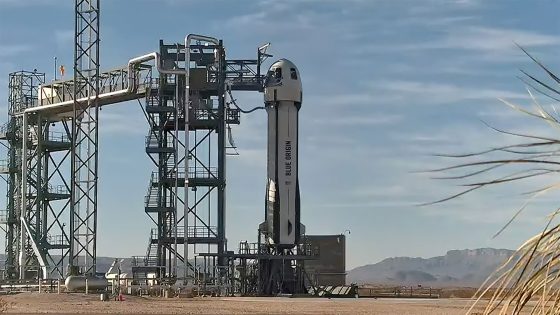
Blue Origin’s New Shepard mission, NS-35, aimed to advance scientific research by launching its 35th flight on August 23, 2025. However, the mission faced a delay due to an avionics issue with the booster. This setback highlights the complexities of commercial spaceflight and the importance of rigorous testing.
- NS-35 launch delayed due to avionics issue.
- Blue Origin aims for 200th payload launch.
- Live webcast planned 15 minutes before launch.
- NS-35 carries experiments from students and educators.
- H.G. Wells capsule dedicated to payloads only.
- Club For the Future postcards sent to space.
The NS-35 mission is significant as it will carry its 200th payload above the Kármán line, featuring experiments designed by students and educators. With a focus on cultivating plants in microgravity and assessing environmental conditions, this mission underscores the role of education in space exploration.
The delay raises questions about the reliability of commercial spaceflight systems. What does this mean for future missions? The implications are profound, as successful payload delivery is crucial for ongoing research and development in space science.
- NS-35 will test plant growth in microgravity.
- Experiments include studies on sound and radiation levels.
- Payloads are designed by students and educational institutions.
- Advanced sensors will gather critical data during the flight.
As we look to the future, the success of missions like NS-35 could pave the way for innovative research, inspiring the next generation of scientists and engineers.